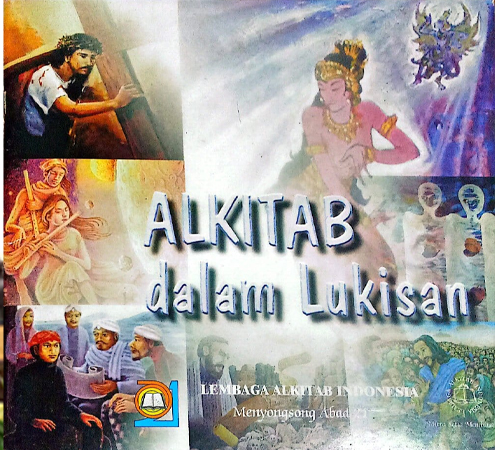
The exhibition “The Bible in Paintings” was inspired by biblical stories that possess profound spiritual, historical, and human significance. Narratives about Jesus, biblical figures, the relationship between God and humanity, love, sacrifice, suffering, hope, and salvation became important sources of inspiration for the creation of these works.
For me, the Bible is not merely a collection of religious texts, but also a rich source of stories, emotions, conflicts, characters, symbols, and values. Painting becomes a medium through which these narratives can be translated into a visual language, allowing messages conveyed through words to be experienced through color, form, expression, composition, and atmosphere.
In the painting process, imagination is used to bring biblical events from the past into visual form. I imagine the atmosphere, environment, human expressions, and relationships between the characters as these events might have unfolded.
Imagination is not intended to replace the biblical narrative, but rather to serve as a bridge for visualizing what cannot be directly seen. The biblical figures are imagined as human beings who experience hope, fear, sadness, love, courage, and personal struggles. In this way, events that took place thousands of years ago can become more immediate and meaningful to contemporary viewers.
“The Bible in Paintings” represents a visual interpretation of biblical stories and messages from the perspective of an artist. Each painting seeks not only to depict an event, but also to explore the meaning behind that event.
Through this approach, painting becomes a meeting place between the biblical text, the artist’s imagination, and the viewer’s personal experience. Viewers are invited not simply to look at an illustration of a biblical story, but to contemplate the values and meanings contained within it.
- catalog Title

- Biography
Three Digital Paintings by Ariesto Hadi Sutopo
In the exhibition “The Bible in Paintings,” Ariesto Hadi Sutopo presented three digital paintings inspired by biblical stories and figures. The three works were created digitally using Adobe Photoshop, which at the time was an important software tool for the creation and manipulation of digital visual art.
The use of Adobe Photoshop allowed Ariesto to explore color, form, texture, lighting, composition, and expression with considerable artistic freedom. Through digital technology, these visual elements were combined to create an atmosphere and artistic interpretation of biblical narratives.
The three paintings represent an intersection of art, technology, and spirituality. Biblical narratives provided the inspiration, the artist’s imagination gave them visual form, and digital technology served as the medium through which the interpretations were realized. In this sense, the works can be viewed as an early exploration of digital art, bringing biblical themes into a contemporary visual language.
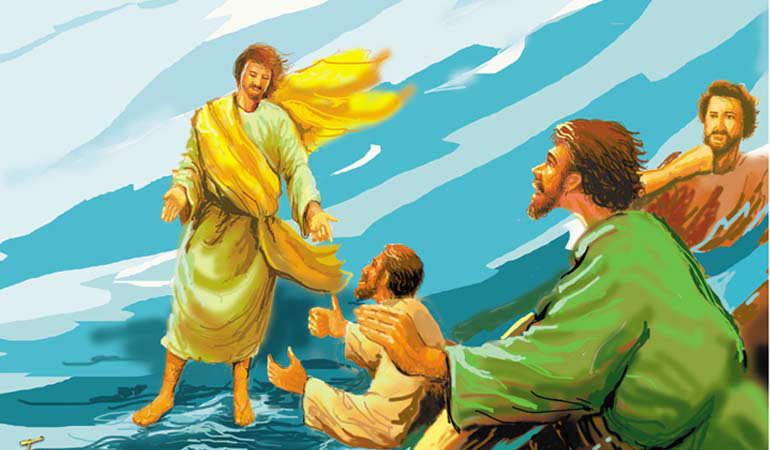
- Jesus waks on the water/li>
- 1300x950 px
- Adobe Photoshop
This digital painting depicts one of the most dramatic events in the Gospels: Jesus walking on the water. The work explores the atmosphere of the sea, the movement of the waves, and the presence of Jesus as a central symbol of faith and hope. Through visual interpretation, the painting reflects the relationship between faith, fear, courage, and trust in the midst of uncertainty.
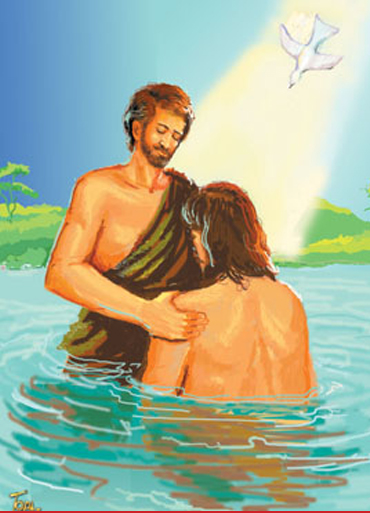
This painting portrays the baptism of Jesus by John the Baptist in the Jordan River. The work interprets the moment as a significant spiritual event, symbolizing humility, obedience, renewal, and the beginning of Jesus' public ministry. Through the composition, figures, water, and surrounding atmosphere, the artist seeks to visualize both the human and spiritual dimensions of this biblical event.
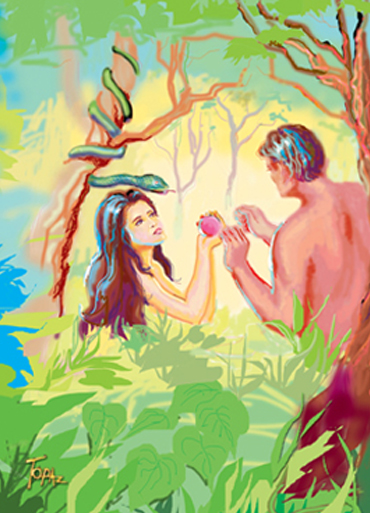
div class="top-text">Adam and EveThis digital painting is inspired by the story of Adam and Eve in the Garden of Eden. The work explores the beginning of humanity and the relationship between human beings, nature, freedom, and responsibility. Through artistic interpretation, the story is presented not merely as an event from the past, but as a reflection on human choice, temptation, disobedience, and the consequences of those choices.